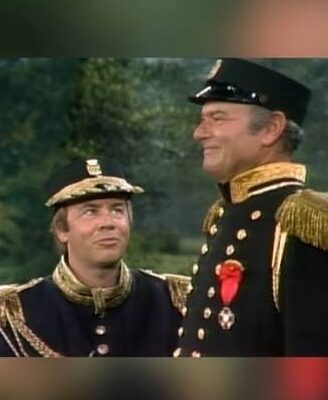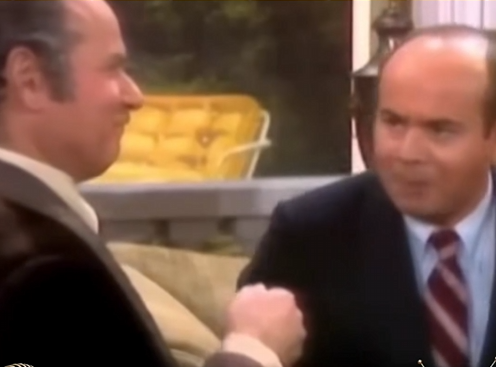

The compilation arrived with little fanfare—a YouTube link, a thumbnail of Tim Conway’s face frozen in that trademark expression of innocent confusion, and a title that promised “Best of Tim Conway: Acting Out.” For longtime fans of The Carol Burnett Show, it was a welcome reminder of a comedy era that seems increasingly distant: a time when laughs were built not on rapid-fire editing or viral moments, but on the slow, deliberate, almost painful commitment of a performer who understood that the funniest thing in the world is a man who refuses to admit he’s in a comedy.
Watching the sketches back-to-back—the collapsing newscast, the allergy treatment that turns a nervous suitor into a cat, the swine-flu experiment that transforms a doctor into a pig, the hopeless community-theater actor butchering A Streetcar Named Desire, the exhausted husband tormented by a wrong-number phone call—reveals something that was easy to miss when these routines first aired. Tim Conway’s secret was not that he acted crazier than everyone else. It was that he acted as though the craziness made perfect sense.
The Newscast: When the Machinery Fights Back
The first sketch in the compilation is a newscast gone wrong. Conway plays an anchor—or perhaps a reporter, or perhaps just a man who wandered onto a set and was handed a microphone. The details blur because the sketch is not about the details. It is about the slow, inevitable collapse of order. Television news depends on control: the anchor knows what is happening, the equipment works, the audience believes that everything behind the desk is operating with professional precision.
Then Conway enters, and the machinery begins to fight back. A teleprompter jams. A camera swings wildly. A sound cue plays at the wrong moment. Simple tasks—reading a line, looking at the right camera, holding a piece of paper—become strangely difficult. Yet Conway does not explode. He does not shout or panic or throw his hands in the air. He waits. He studies the problem. He tries another solution. And that tiny delay—the moment when his character still believes he can somehow restore order—is often funnier than the malfunction itself.
It is a lesson in comic patience. Conway gives disaster time to breathe. He lets the audience see the problem coming before it arrives, and then he lets them wait for it. The laughter builds not from the joke but from the anticipation of the joke.
The Allergy: Becoming a Cat in Front of Your Future Father-in-Law
The second sketch is a masterpiece of slow transformation. Conway plays a young man meeting the father of the woman he wants to marry. He needs to appear responsible, normal, marriage material. Instead, medication for an allergy begins producing distinctly feline behavior.
The genius is in how slowly Conway lets the animal take over. A glance lasts too long. A movement becomes slightly suspicious. His attention drifts toward something no normal adult should suddenly care about—a dangling string, a flickering light, a patch of sunlight on the carpet. Eventually, the question is no longer whether the young man is nervous. The question is whether he is becoming a household pet in front of his possible future father-in-law.
And Conway continues trying to behave politely through all of it. That is the joke hiding underneath the joke. His body is betraying him. His social instincts are still desperately trying to save the evening. He wants to be accepted. He wants to be seen as a suitable husband. Instead, he is meowing.
The Swine Flu: A Doctor Becomes a Pig
The third sketch, which aired on January 15, 1977, pushes the transformation idea even further. Conway plays a doctor who has taken numerous experimental swine-flu vaccine shots and begins suffering an extraordinary reaction. The transformation builds instead of arriving all at once. A snort. A strange appetite. Pig-related phrases that suddenly sound much less innocent. Then the horrifying realization that the man is beginning to resemble the animal named in the vaccine.
The surrounding characters try to respond with medical seriousness. Conway does something much funnier. He reacts like a man increasingly annoyed by an impossible inconvenience. Even when the sketch reaches full absurdity, his character still seems concerned with ordinary problems such as his career and marriage. He is becoming a pig. But he still has plans.
That collision between the impossible and the mundane is pure Conway. He does not play the pig for laughs. He plays the man who is turning into a pig and cannot understand why everyone is making such a big deal about it.
The Bad Actor: Pretending to Be Terrible While Being Brilliant
The compilation then shifts to a different kind of performance. In a 1971 episode built around a production of A Streetcar Named Desire, Conway arrives as George Perkins, a hopelessly unsuitable choice to play Stanley opposite Carol Burnett’s Stella. Harvey Korman’s character tries to keep the production functioning while Conway—as George—destroys it one line at a time.
The official Carol Burnett Show channel describes Conway in the routine as the “world’s worst scene partner.” That description is funny because being convincingly bad on purpose is remarkably difficult. Conway has to mistime the correct moment. He has to deliver a line incorrectly in exactly the right way. He has to look physically wrong for the romantic intensity of the scene without ever appearing as though Tim Conway the performer has lost control.
George believes he is acting. Everyone else knows he is destroying the rehearsal. Again, Conway’s character is the last person to understand the joke. And that may be the key.
The Wrong Number: When the World Transforms Instead
The final sketch in the compilation is the quietest and perhaps the most revealing. The setup could hardly be smaller: a mistaken late-night telephone call awakens a married couple. Conway’s husband believes somebody dialed the wrong number. Carol Burnett’s wife starts constructing another explanation. Maybe the silent caller knows him. Maybe an ordinary action is actually a signal. Maybe there is another woman.
Conway tries logic. Logic makes things worse. He tries exhaustion. That looks suspicious. He wants to close the window because he is cold. Now even the window seems capable of becoming evidence. This time Conway does not need to transform physically. The world around him transforms instead. An accidental phone call becomes a conspiracy while he lies there wondering how sleeping became so complicated.
The Secret of the Method
Watching these sketches together reveals the thread that connects them. Conway could be the source of chaos or its victim. He could dominate physically or barely move. He could play an animal transformation or simply stare at another actor for half a second longer than expected. The mechanism changed. The commitment did not.
That is why these routines can still land decades after the sets, costumes, and cultural references have aged. The audience is not really laughing at a cat impression. Or a pig face. Or a malfunctioning machine. They are laughing at someone trying desperately to behave normally after normal has already disappeared.
Tim Conway understood that contradiction better than almost anyone. He could make the situation more ridiculous with every passing second while playing his character as though nothing about it was ridiculous at all. The world around him was losing its mind. Tim Conway was usually the only person who seemed convinced everything was still perfectly reasonable.
And that may be exactly why everyone else—and generations of viewers—kept breaking first.
The End