The Driver Refused the Huge Tip and Asked, “Where Did You Get This Receipt?”—And the Name on the Back Changed Everything.97

**Title: The Driver Refused the Huge Tip and Asked, “Where Did You Get This Receipt?”—And the Name on the Back Changed Everything**
The rain had stopped an hour ago, but the streets of Chicago were still slick and shiny, reflecting the streetlights like scattered diamonds. Michael pulled his cab to the curb outside the Drake Hotel and put it in park. He was tired—it had been a fourteen-hour shift, and his back ached from sitting. But the fare was good, and the passenger, an older man in an expensive suit, had been quiet and polite.
“That’ll be forty-two fifty,” Michael said.
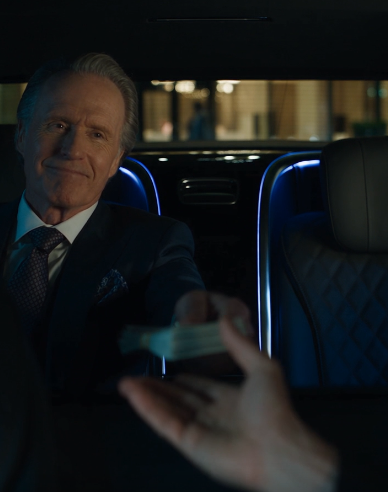
The man handed him a credit card. Michael ran it through the reader. Then the man reached into his wallet and pulled out a thick fold of bills—hundreds, maybe more.
“Here,” the man said. “For your trouble.”
Michael looked at the money. It was more than he made in a week. He shook his head.
“I can’t take that.”
“It’s just a tip.”
“It’s too much. I can’t.”
The man frowned. “Everyone takes the tip.”
Michael reached into his pocket and pulled out a worn piece of paper—a receipt, faded and creased. He held it up.
“Where did you get this?”
The man squinted at it. “What is that?”
“It’s a receipt. From a hotel. Twenty years ago. It was in my mother’s things.”
The man’s face changed. His eyes widened. He reached for the receipt, but Michael pulled it back.
“Where did you get it?” Michael repeated.
The man’s hand trembled. “Let me see it.”
Michael turned the receipt over. On the back was a signature—a name written in blue ink, faded but still legible.
*Richard Sterling.*
The man stared at the signature. His face went pale.
“That’s my name,” he whispered.
“I know.”
“Where did you get this?”
“I told you. My mother’s things. She died last month. I was going through her papers. I found this receipt and a letter.”
“A letter?”
“A letter about a girl who disappeared twenty years ago.”
The man reached for the door handle. “I have to go.”
Michael locked the doors. “Not yet.”
“You can’t keep me here.”
“I’m not keeping you. I’m asking you a question.”
“I don’t have to answer.”
“You do if you want to know the truth.”
The man stopped. He looked at Michael. His eyes were filled with something—fear, maybe, or guilt.
“What truth?”
“The truth about what happened to Sarah.”
The man’s face crumpled. He sank back into the seat.
“How do you know that name?”
“My mother wrote it in the letter.”
—
**The Letter**
Michael had found the letter in a shoebox. It was tucked between old photographs and birth certificates, hidden at the bottom of a drawer his mother had kept locked. He had not known the drawer existed until after she died. He had not known the letter existed until he read it.
*Dear Michael,*
*If you are reading this, I am gone. There is something I need to tell you. Something I should have told you a long time ago.*
*Twenty years ago, I helped a young woman escape from a forced marriage. Her name was Sarah. She was eighteen years old. Her family had arranged for her to marry a man twice her age—a man who had already been married twice, a man who was known to be violent. She did not want to marry him. She was afraid. She came to me because I was her neighbor, because I was the only person she trusted.*
*I hid her. I gave her a place to stay. I helped her get a new identity. I helped her start a new life. I never told anyone. Not even your father.*
*But her family did not believe she had run away. They believed she had been kidnapped. They hired people to find her. They offered rewards. They never stopped looking.*
*I kept the receipt because I was afraid. I kept it as proof—proof that she had been here, proof that she had been safe. I kept it in case something happened to me. I kept it in case someone came looking.*
*If someone comes looking, Michael, tell them the truth. Tell them she is alive. Tell them she is safe. Tell them she is happy.*
*Tell them I am sorry.*
*Love,*
*Mom*
—
**The Confession**
Michael looked at the man in the back seat. “You’re Richard Sterling. You’re the man who helped her family find her.”
Richard did not answer.
“You were the private investigator. You’re the one who tracked her down.”
“I was young,” Richard said. “I was trying to make a name for myself. The family paid me well. They wanted their daughter back.”
“But you didn’t find her.”
“I found her. I found her and I let her go.”
Michael stared at him. “What?”
“I found her. I found the address. I went to see her. She was living in a small apartment. She was working at a bookstore. She was happy. She was free.”
“So you let her go.”
“I told the family I couldn’t find her. I told them she had disappeared. I lied.”
“Why?”
“Because I saw her face. Because I saw how happy she was. Because I couldn’t take her back to that life.”
Michael was quiet for a long moment. “My mother’s letter said she was hiding her. She said she never knew if the family found her.”
“She didn’t know. I never told her. I never told anyone.”
“So my mother spent twenty years thinking she had failed. Thinking that Sarah had been taken back.”
“She didn’t fail. She saved her.”
—
**The Phone Call**
Michael reached into his pocket and pulled out his phone. He had one more thing—a number. His mother had written it on the bottom of the letter.
*If you ever need to reach her, call this number. Her name is Sarah now. She goes by Sarah Mitchell.*
He dialed. The phone rang three times. Then a woman answered.
“Hello?”
“Hi. My name is Michael. My mother was Eleanor. She passed away last month.”
There was a long pause. Then a soft gasp.
“Eleanor? Eleanor from the old neighborhood?”
“Yes.”
“She saved my life. She gave me a new life. I never got to thank her.”
“She knew. She always knew.”
“I tried to find her. I tried to call. But I was afraid. Afraid that if I reached out, someone would find me.”
“No one is looking for you anymore. The man who was looking—he’s sitting in my cab right now.”
Another pause. “Richard?”
“Yes.”
“Is he… is he going to hurt me?”
“No. He’s the one who let you go.”
Sarah was quiet. Then she asked: “Do you still have the bracelet?”
Michael looked down at his wrist. He was wearing a thin silver bracelet—a simple chain with a small charm, a bird in flight. His mother had given it to him on his sixteenth birthday. She had told him it was a gift from a friend.
“I’m wearing it right now.”
“That was mine. I gave it to your mother when I left. I told her to give it to her son one day. I told her to tell him the story.”
“She told me. She told me everything.”
“Then you know.”
“I know.”
—
**The Reunion**
Michael drove Richard to a small park on the outskirts of the city. Sarah was waiting for them. She was older now—in her late forties, with grey-streaked hair and tired eyes. But she smiled when she saw them.
She walked to the cab. She looked at Richard.
“I remember you,” she said. “You were the one who found me.”
“I was.”
“You let me go.”
“I did.”
“Why?”
“Because it was the right thing to do.”
Sarah nodded. She turned to Michael. She touched his wrist.
“You still wear it.”
“I never took it off.”
She reached into her pocket and pulled out a matching bracelet—the same bird, the same chain.
“I kept mine too.”
They stood together in the park, the three of them—the driver, the private investigator, and the girl who disappeared. The rain had started again, a soft drizzle that misted the air.
“I don’t know how to thank you,” Sarah said.
“You don’t have to.”
“I do.”
She looked at Richard.
“I forgive you.”
Richard did not answer. He simply bowed his head.
—
**The Lesson**
Never let someone else decide what your story is. Never let fear keep you from the truth. Never let the past remain buried when it can be healed.
Michael almost took the tip. He almost let Richard walk away. He almost kept the secret.
But he asked a question. He showed the receipt. He told the truth.
And because he did, a woman who had been lost for twenty years was found. A man who had carried guilt for decades was forgiven. A story that had been left unfinished was finally complete.
Because sometimes the bravest thing you can do is refuse the money—and ask the question instead.