The Father Smashed the Guitar Against the Workbench—Then His Son Pulled Out a Record Contract with the Name of the Man Who Had Stolen Everything.147

**Title: **
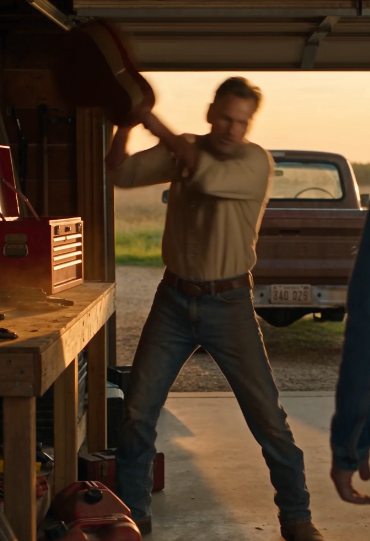
The garage smelled of oil and sawdust and old memories. Tools hung on pegboards. A half-disassembled engine sat on the lift. The radio played something soft and forgettable. It was a place of work. A place of sweat. A place where dreams had been put away years ago, locked in a box and buried under a pile of greasy rags.
Ray stood at the workbench, holding a guitar. It was old—a Martin D-28, weathered and worn, the wood dark with age. It had been his father’s guitar. His father had played it in honky-tonks and barrooms across Texas. His father had taught him the first chords. His father had told him that music was the only thing that mattered.
Ray had believed him. Once.
He raised the guitar above his head. He brought it down against the workbench. The neck snapped. The strings popped. The body cracked. A sound like a gunshot echoed through the garage.
“Your son is not going into that music business!”
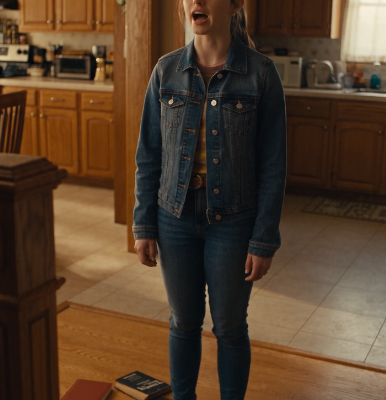
Cody stood in the doorway. He was nineteen years old, tall and thin, with his mother’s eyes and his father’s stubborn jaw. He had been standing there for a minute. He had seen everything.
“Dad… that was Grandpa’s guitar.”
Ray did not turn around. He was breathing hard. His hands were shaking.
“I know what it was.”
Cody reached into his back pocket. He pulled out a folded piece of paper. He held it up.
“I signed a record deal today.”
Ray laughed. It was not a kind laugh. It was the laugh of a man who had been hurt too many times to believe in anything.
“They’ll cheat you. They’ll take everything you have. Just like they did to me.”
“Cheat you?”
Ray turned. His face was red. His eyes were wet.
“Twenty-five years ago, a producer stole a song from me. It went to number one. I never got a penny.”
Cody looked at the contract in his hand. His fingers were trembling.
“What was his name?”
“Vince Marlow.”
The contract slipped from Cody’s hand. It fluttered to the floor and landed beside the broken guitar.
“Dad… Vince Marlow is the one who just signed me.”
—
**The Story**
In 2001, Ray had been a songwriter.
He had been good. He had been hungry. He had been writing songs in his garage every night after work, recording demos on a four-track, mailing them to every producer and label he could find. He had believed he was one rejection away from his big break.
Then he had met Vince Marlow.
Vince was a producer—a small-time guy with big connections. He had heard one of Ray’s demos and invited him to his studio. He had told Ray he had talent. He had told Ray he wanted to work with him. He had told Ray to send him more songs.
Ray had sent him everything. His best work. His heart. His soul.
Two months later, one of those songs—”Back Road Home”—was playing on the radio. It was performed by a country singer Ray had never heard of. The writing credit belonged to Vince Marlow.
Ray had no money for a lawyer. He had no proof beyond a demo tape and a postmarked envelope. He had no power against a man with connections.
He had given up. He had put his guitar in the closet. He had taken a job at a garage. He had spent twenty-five years trying to forget.
—
**The Lawyer**
Cody did not tear up the contract.
He did not cancel the deal. He did not confront Vince. He did not do anything rash.
He went home. He went to the attic. He found the box his grandfather had left him—the box of old demos, old letters, old photographs. He found the original recording of “Back Road Home.” He found the postmarked envelope from 2001. He found everything.
He called a copyright lawyer.
The lawyer listened. The lawyer reviewed the evidence. The lawyer smiled.
“This is the clearest case of copyright infringement I have ever seen.”
—
**The Lawsuit**
The lawsuit was filed three months later.
Vince Marlow was served papers at his Nashville office. He laughed when he saw them. He told his assistant to throw them away. He told his lawyers to bury them in motions. He told everyone who would listen that the case was frivolous.
But the evidence was overwhelming. The demo tape. The postmarked envelope. The testimony of Ray’s old bandmates. The testimony of the engineer who had worked on the original session.
The judge ruled in Ray’s favor. Vince was ordered to return the songwriting credits. He was ordered to pay twenty-five years of royalties. He was ordered to issue a public apology.
Ray did not attend the hearing. He did not want to see Vince’s face. He did not want to hear his excuses.
But when the verdict was read, he sat in his garage and cried.
—
**The Concert**
Cody’s first concert was held in a small venue in Austin—a hundred seats, a small stage, a single spotlight.
He played his own songs. He played covers. He played everything he had been working on for years.
And then, for the encore, he brought out a chair. He placed it in the center of the stage. He sat down. He looked at the audience.
“This song was written by my father,” he said. “It was stolen from him twenty-five years ago. Tonight, for the first time, he’s going to hear it performed with his name on it.”
He began to play “Back Road Home.”
In the audience, Ray stood at the back. He was wearing a clean shirt and a nervous expression. He had not wanted to come. He had not wanted to hear the song again. But Cody had begged him. Cody had told him he needed to be there.
Ray listened. He heard his own words—words he had written when he was young and hopeful and in love. He heard his own melody—the one he had hummed to himself in the garage, the one he had played for his father on that old Martin guitar.
He cried. He cried like a child. He cried like a man who had been carrying a weight for twenty-five years and had finally been allowed to put it down.
—
**The Phone Call**
A week later, Cody’s phone rang.
He was in his apartment, packing for a tour. He was happy. He was hopeful. He was ready.
He looked at the screen. The number was unfamiliar. He almost did not answer.
But he did.
“Hello?”
“Cody? This is Vince Marlow.”
Cody froze.
“I’m not calling to cause trouble. I’m calling to tell you something you need to know.”
“What could you possibly tell me?”
“You think your father is the only one who wrote that song?”
Cody’s blood ran cold.
“What do you mean?”
“Ask him about a friend named Jimmy.”
The line went dead.
—
**The Question**
Who was Jimmy?
That is a question for another time.