
**Title: **
—
**Part 1: The Candyman**
The neighborhood was called Oakwood—a quiet, tree-lined street in the small town of Greensboro, North Carolina. It was the kind of place where families knew each other’s names, where children played in the front yards until the streetlights came on, where nothing bad ever seemed to happen. It was the kind of place where parents felt safe letting their children walk to the corner store alone.
In the spring of 1976, a new figure appeared on Oakwood Street.
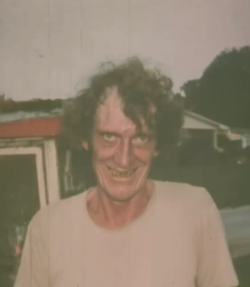
He was an older man—perhaps in his sixties—with silver hair and a gentle smile and a cart that he pushed along the sidewalk every afternoon. The cart was brightly painted, decorated with images of lollipops and chocolate bars and gumdrops. On the side, in cheerful red letters, it read: *Walter’s Sweets.*
Walter was his name. Walter was his only name—he never gave a last name, never mentioned where he came from, never talked about his past. He simply appeared each afternoon, pushing his cart along the street, stopping at the corner where the children gathered.
And the children loved him.
They loved the lollipops—bright red and green and blue, the size of their fists. They loved the chocolate bars—smooth and creamy and wrapped in foil. They loved the gummy bears and the licorice and the hard candies that came in every color of the rainbow.
But what they loved most was that Walter gave it all away for free.
“Free?” the children would ask, their eyes wide.
“Free,” Walter would say, smiling. “For my favorite customers.”
At first, the parents thought he was simply kind. A lonely old man with no family, perhaps. A retiree who enjoyed the company of children. A generous soul who wanted to bring a little joy to the neighborhood.
They did not think twice when their children came home with pockets full of candy. They did not question why Walter never asked for money. They did not wonder why he seemed to know every child’s name, every child’s schedule, every child’s favorite flavor.
They simply smiled and said thank you.
—
**Part 2: The Nightmares**
The nightmares began in June.
The first was a six-year-old girl named Lily. Her parents woke to the sound of her screaming—a high, terrified shriek that cut through the quiet of the night. They ran to her room. She was sitting up in bed, her face pale, her eyes wide, her small body trembling.
“The red door!” she sobbed. “The red door! He’s behind the red door!”
Her father held her. Her mother stroked her hair. They told her it was just a dream. They told her there was nothing to be afraid of. They turned on the light and sat with her until she fell asleep.
Two nights later, it happened again.
This time, it was a seven-year-old boy named Michael. His parents heard him crying in his sleep—soft, frightened sobs that pulled them from their own bed. They found him curled in a corner of his room, his hands over his ears.
“The hallway!” he whispered. “The dark hallway! And the crying! I can hear the crying!”
His parents assumed it was a phase. A normal part of childhood. Nightmares were common. Nightmares were harmless.
But then more children started having them.
One by one, the children of Oakwood Street woke in the middle of the night, screaming about the same thing. A dark basement. A narrow hallway. A bright red door. Someone crying behind it.
The parents compared notes. They talked at the school bus stop, at the grocery store, at the neighborhood barbecue. They realized that every child having the nightmare had eaten one of Walter’s free lollipops.
Every single one.
—
**Part 3: The Search**
The parents went looking for Walter.
They walked to the corner where he usually parked his cart. The corner was empty. They walked along the street, searching every sidewalk, every alley, every park. They found nothing. The cart was gone. The cheerful red letters—*Walter’s Sweets*—were nowhere to be seen.
They called the police.
The police drove to the address Walter had given when he first appeared in the neighborhood. It was a small, weathered house at the end of a dead-end road—a house that had been vacant for years. The windows were dark. The yard was overgrown. The front door was unlocked.
The police went inside.
The house was completely normal.
The living room was neat. The kitchen was clean. The bedrooms were made. There were books on the shelves. There were dishes in the cabinets. There were photographs on the walls—photographs of children, but none that the police recognized.
They searched the house from top to bottom. They found nothing. No sign of Walter. No sign of the cart. No sign of anything strange.
And then they found the basement door.
It was at the end of a narrow hallway. The door was painted bright red. The same red the children had described. The same red they had seen in their nightmares.
The police opened the door.
—
**Part 4: The Room**
The basement was dark and cold.
The stairs were narrow and steep. The walls were rough and unfinished. The air smelled of dust and damp and something else—something sweet, something sickly, something that made the officers cover their noses and mouths.
At the bottom of the stairs, there was another door.
This one was also red. The police opened it.
The room beyond was small—barely fifteen feet by fifteen feet. The walls were lined with little beds. There were twelve of them. Each bed had a pillow. Each pillow had a photograph pinned above it.
The photographs showed sleeping children.
The police recognized every face. They were the children of Oakwood Street—the children who had eaten Walter’s free lollipops. Lily. Michael. Sarah. James. Emily. David. Jessica. Thomas. Rachel. Daniel. Katie. And one more.
At the far end of the room, there was one more bed.
It was empty. Its photograph showed a little girl—a girl with dark hair and a gap-toothed smile and her eyes closed in sleep. The police recognized her immediately. It was the detective’s daughter.
She was asleep at home that very night.
—
**Part 5: The Sealing**
The house was immediately sealed.
The police called for backup. They called for forensic teams. They called for the state police, the FBI, the National Guard. The entire street was cordoned off. The neighbors were evacuated. The children were questioned. The parents were interviewed. The photographs were collected. The beds were photographed. The red door was examined.
But Walter was never found.
His cart was never found. His records were never found. His identity was never confirmed. He had simply appeared one day, sold candy to children, and then disappeared—leaving behind a basement full of beds and photographs and a red door that the children had seen in their nightmares.
Before morning, the red door was bricked shut.
The basement was filled with concrete. The house was demolished. The lot was paved over. A new house was built on the site—a house with no basement, no red door, no hallway leading to a room full of little beds.
But the children never forgot.
The nightmares continued. They continued for weeks, for months, for years. They continued even after the children grew up, even after they moved away, even after they had children of their own.
They never forgot the red door. They never forgot the crying. They never forgot the feeling of being watched while they slept.
And they never forgot Walter.
—
**Part 6: The Legacy**
The case of the Candyman was never solved.
The police investigated for years. They followed every lead. They interviewed every witness. They searched every database. They found nothing. No record of a man named Walter. No record of a candy cart. No record of a house with a red door and a room full of beds.
The children grew up. They became adults. They became parents, grandparents, great-grandparents. They moved away from Oakwood Street. They built new lives in new towns. They tried to forget.
But they never did.
And sometimes, on dark nights, when the wind blows and the shadows stretch across the bedroom walls, they wake up screaming.
They wake up screaming about the red door.
They wake up screaming about the crying.
They wake up screaming about Walter.
—
**Part 7: The Question**
Behind the door, the photographs turned sleep into something the investigators could no longer regard as private. The children had described a place they should never have visited, while the room appeared to know where they were at home.
Sealing the wall was an action the officers could take. It was not proof that the route between the dreams and the little beds depended on that doorway remaining open.
The red door was bricked shut. The basement was filled with concrete. The house was demolished. But the dreams continued.
The children never stopped seeing the red door. They never stopped hearing the crying. They never stopped feeling the presence of someone watching them while they slept.
And Walter was never found.
—
**The End**