
**Title: **
—
**Part 1: Paradise**
The brochure had promised paradise.
White sand beaches. Turquoise water. Palm trees swaying in the breeze. A small, secluded island in the Caribbean, far from the crowds, far from the tourists, far from everything except the sun and the sea and the silence.
It was exactly what the five friends had been looking for.
They were in their early twenties—college students, recent graduates, young people with nothing tying them down and everything ahead of them. They had saved for months, scrimping and planning, determined to take a trip together before the realities of adulthood pulled them in different directions. When they found the listing for the island—a private beach house, available for a week, at a price that seemed too good to be true—they booked it immediately.
They arrived on a Saturday, stepping off a small boat onto a wooden dock that creaked beneath their feet. The island was small—barely a mile across—and covered in dense jungle. There was a single beach house, perched on a bluff overlooking the water. There was a garden full of flowers they did not recognize. There were no other houses. No other people. Just a caretaker—an elderly man with dark, weathered skin and eyes that seemed to look through them rather than at them.
He introduced himself as Elias. He spoke little English. He handed them a key and pointed toward the house. Then he disappeared into the jungle, and they did not see him again for three days.
—
**Part 2: The Third Day**
The first two days were perfect.
They swam. They sunbathed. They explored the jungle, finding hidden waterfalls and secluded coves. They drank rum and played cards on the porch. They laughed at jokes that made no sense and talked about their lives and their hopes and their fears. They did not think about the caretaker. They did not think about the silence. They did not think about anything except the sheer, uncomplicated joy of being young and free in a place that felt like the edge of the world.
On the third day, they noticed something wrong.
They had returned from the beach to find the front door unlocked. It had been locked when they left. They were sure of it.
“Maybe one of us forgot,” Sarah said.
“No,” Mark said. “I locked it myself.”
They went inside. Nothing was missing. Their wallets were still on the counter. Their cameras were still on the shelf. Their clothes were still in their suitcases.
But their passports were gone.
Then they found them—on the kitchen table, laid out in a neat row. Five passports. Five photographs. Five names. Side by side, exactly aligned.
They stood in silence, staring at the passports.
“Someone was here,” Sarah said.
“The caretaker?” Mark asked.
“Who else?”
They walked into the jungle to find Elias. They found him sitting outside a small shed, smoking a pipe. He looked at them with those dark, unreadable eyes.
“Did you come into our house?” Sarah asked.
Elias did not answer.
“Someone came into our house and moved our passports.”
Elias took a long drag of his pipe. Then he spoke, his voice low and heavy.
“It’s better if you leave this island.”
The friends laughed. They thought he was joking. They thought he was an eccentric old man who wanted to scare them. They told him they had paid for the week, that they were not leaving, that they would appreciate it if he stopped playing games.
Elias did not laugh. He simply watched them walk away.
—
**Part 3: The Mask**
That night, they saw the man.
They were sitting on the porch, drinking rum and playing cards, trying to forget about the passports and the caretaker and the strange feeling that had settled over the island. The music was playing. The lanterns were lit. The stars were bright.
And then Sarah looked up.
“There’s someone out there.”
They all turned. At the edge of the jungle, barely visible in the darkness, a figure was standing. He was tall—unnaturally tall—and wearing a strange mask. The mask was dark, with jagged edges and empty eyeholes. It looked like a skull. Or an animal. Or something in between.
The figure did not move.
“Hey!” Mark shouted. “Who’s there?”
The figure did not answer.
They stood up. They walked toward the window. They pressed their faces against the glass, trying to see through the darkness.
The figure raised one hand—slowly, deliberately—and then stepped back into the shadows. By the time they ran outside, he was gone.
—
**Part 4: The Police**
The next morning, they went to the police.
The police station was a small building at the edge of the dock, with two officers who spoke broken English and looked at the friends with amused smiles. They listened to the story. They nodded. They wrote a few notes.
“Tourists play pranks on each other here all the time,” one officer said. “It was probably a local kid. Someone trying to scare you.”
“He wasn’t a kid,” Sarah said. “He was tall. Very tall. And he was wearing a mask.”
The officers laughed. “The island is safe. No one is going to hurt you. Enjoy your vacation.”
The friends left the station. They were not convinced. But they were also determined not to let a prank ruin their trip. They had one night left. They would make the most of it.
—
**Part 5: The Last Night**
They bought drinks. They played music. They stayed up late.
They told themselves that the figure had been a joke. They told themselves that the caretaker had been trying to scare them. They told themselves that the passports had been moved by the wind, that the door had been unlocked by accident, that everything was fine.
They drank. They laughed. They danced. They forgot.
The last thing Sarah remembered was sitting on the porch, looking at the stars, feeling the rum warm in her stomach.
Then everything went dark.
—
**Part 6: The Awakening**
They woke up on the hard ground.
Their heads were pounding. Their mouths were dry. Their wrists and ankles were bound with rope. They were tied to wooden posts, their arms stretched above their heads, their bodies exposed to the cold night air.
They were not on the beach. They were not on the porch. They were not in the house.
They were on a small island—a tiny spit of rock and sand, barely big enough to stand on. The jungle was gone. The beach house was gone. There was nothing but darkness and water and the sound of waves crashing against the rocks.
And a fire.
A huge fire was burning in the center of the island. The flames reached up toward the sky, crackling and roaring, sending sparks into the darkness. The smoke smelled of wood and something else—something sweet, something sickly.
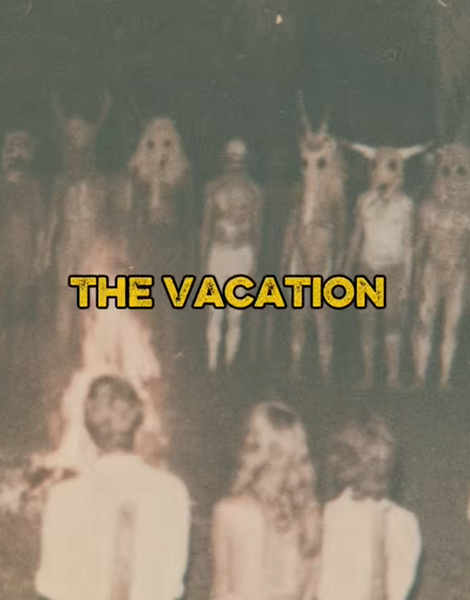
Across the flames stood dozens of men.
They were wearing masks—animal masks, skull masks, masks with jagged teeth and hollow eyes. Their faces were painted. Their bodies were covered in dark paint. They did not speak. They did not move. They simply stood there, watching.
One of them stepped forward.
He removed his mask.
It was Elias.
The caretaker.
He looked at the terrified teenagers—at their wide eyes, at their trembling bodies, at their mouths open in silent screams—and he spoke.
“I warned you to leave.”
—
**Part 7: The Silence**
The fire roared. The waves crashed. The men with painted faces stood in silence.
The five friends did not speak. They could not speak. They could only stare at the old man who had warned them—the old man they had laughed at—and wonder what was going to happen to them.
Elias stepped closer.
“This island has been sacred for hundreds of years,” he said. “My people have lived here for generations. We have protected it. We have kept it safe.”
He paused.
“But you came. You came with your noise and your drinking and your disrespect. You came to a place you did not understand.”
“We didn’t mean to—” Sarah started.
“You laughed at me,” Elias said. “You thought I was crazy. You thought I was a joke. You did not listen.”
He gestured toward the men behind him.
“These are my brothers. My cousins. My sons. They have seen many tourists come to this island. Most of them leave. Some of them do not.”
“What do you want from us?” Mark asked. His voice was shaking.
Elias looked at him. His eyes were dark and empty.
“We want you to understand,” he said. “We want you to know that this island is not yours. It is not your playground. It is not your resort. It is our home. And we will protect it.”
—
**Part 8: The Wait**
The men with painted faces stood in silence. The fire burned. The waves crashed.
The teenagers waited.
They did not know what to expect. They did not know if they would be killed. They did not know if they would be released. They did not know anything except that they were tied to posts on a small island in the middle of the Caribbean, surrounded by men in masks and a caretaker who had warned them to leave.
The hours passed. The sky began to lighten. The fire began to die.
And then, without a word, the men untied them.
They did not speak. They did not explain. They simply cut the ropes, lifted the teenagers to their feet, and led them back to the boat. They did not threaten them. They did not hurt them. They simply took them back to the main island, back to the beach house, back to their passports, and left them there.
The five friends stood on the porch, shivering, exhausted, and alive.
They did not speak. They did not pack. They did not wait for the boat that was supposed to take them back to the mainland. They simply stood there, staring at the jungle, wondering what had just happened.
And then they left.
—
**Part 9: The Lesson**
They never went back to the island.
They never spoke about it to anyone except each other. They never reported it to the police. They never told their families. They never wrote it down.
But they never forgot.
They never forgot the masks. The painted faces. The fire. The silence. The old man who had warned them to leave and who had been right.
They never forgot the feeling of being tied to a post in the middle of the night, surrounded by darkness and water and people who had decided to teach them a lesson they would never forget.
And sometimes, on dark nights, when the wind blows and the shadows stretch across the walls, they wonder if the island is still there. If the old man is still there. If the men with painted faces are still waiting.
And they wonder if they were lucky.
Or if they were spared.
—
**The End**