
**Title: **
—
**Part 1: The Arrival**
The letter arrived on a Tuesday in June 1977.
It was written in careful, looping cursive on stationery that smelled faintly of lavender. It was from their grandparents—grandparents they had never met, grandparents their mother never spoke about, grandparents who lived on a remote farmhouse in the hills of Pennsylvania. The letter invited them to spend a week. Just a week. To get to know them.
Their mother, Sarah, had been hesitant. She had read the letter three times, her brow furrowed, her lips pressed into a thin line. But in the end, she had agreed. The children—Daniel, twelve, and Emily, ten—were excited. They had never met their grandparents. They had never even seen a photograph.
The drive took six hours. The roads grew narrower. The houses grew farther apart. The trees pressed close on either side, their branches forming a canopy that blocked out the sun. By the time they turned onto the gravel driveway that led to the farmhouse, the sky had turned gray, and the air had grown cold.
The farmhouse was old—Victorian, perhaps, with a wraparound porch and a tower room and windows that reflected the darkening sky like mirrors. It stood at the end of a long dirt road, surrounded by overgrown fields and a barn that leaned to one side. There was a shed behind the house, its roof sagging, its door hanging open on a single hinge.
Their grandparents were waiting on the porch.
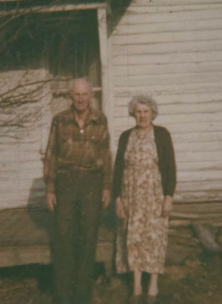
The grandmother was a small woman with silver hair and a smile that did not quite reach her eyes. The grandfather was tall and thin, with hands that trembled and eyes that seemed to look through them rather than at them. They introduced themselves as Margaret and Harold. They welcomed the children with hugs that felt stiff and formal. They showed them to their rooms—two small bedrooms at the top of the stairs—and told them dinner would be served at six.
And then their mother said goodbye.
She knelt down and hugged them both. She told them to be good. She told them to listen to their grandparents. And then she said one thing—one rule—that she repeated twice.
“Be in bed by nine-thirty. No matter what you hear. No matter what you see. Be in bed by nine-thirty. Promise me.”
They promised.
—
**Part 2: The First Night**
Dinner was silent.
Margaret served roasted chicken and potatoes and green beans. Harold ate without looking up from his plate. The children tried to make conversation—about school, about their friends, about the long drive—but their grandparents answered in monosyllables. The only sound was the clink of silverware on china and the ticking of the grandfather clock in the hallway.
At nine o’clock, Margaret stood up and announced that it was time for bed. The children protested—it was still light outside, they were not tired—but Margaret was firm.
“Nine-thirty,” she said. “That is the rule.”
They went upstairs. They brushed their teeth. They climbed into bed. The clock in the hallway ticked. The house creaked. The wind rattled the windowpanes.
At nine-thirty, they turned off the lights.
At ten o’clock, the scratching began.
It was a soft sound at first—the sound of fingernails dragging across wood. Daniel heard it first. He sat up in bed, his heart pounding. He looked at Emily. She was already awake, her eyes wide, her hand pressed against her mouth.
“Did you hear that?” he whispered.
She nodded.
The scratching continued. It was coming from beneath their bedroom door. Something was moving out there. Something was scratching at the door as if it were trying to get in.
Daniel crept out of bed. He tiptoed to the door. He knelt down. He peered through the crack at the bottom.
He saw nothing. Just the dark hallway and the flickering light of the lamp at the top of the stairs.
The scratching stopped.
Daniel waited. Emily waited. The clock ticked. The wind blew.
And then they heard footsteps—slow, heavy footsteps—moving away from their door. They heard a door open. They heard it close.
They did not sleep that night.
—
**Part 3: The Second Day**
In the morning, Margaret acted as if nothing had happened.
She served breakfast—pancakes and bacon and orange juice—and smiled at the children. She asked them how they had slept. Daniel and Emily exchanged glances. They did not know what to say.
“Fine,” Daniel said.
“Good,” Margaret said.
Harold sat at the head of the table, staring at his plate. He did not speak. He did not eat. He simply sat there, his hands trembling, his eyes fixed on something in the distance.
After breakfast, the children explored the farm. They found the barn—empty, dusty, filled with old tools and rusted machinery. They found the fields—overgrown, wild, filled with tall grass and wildflowers. They found the shed—small, dark, its raised wooden floor providing a narrow crawlspace beneath.
They did not find their grandparents.
Margaret and Harold remained in the house. They did not go outside. They did not work in the garden. They did not tend the fields. They simply sat in the living room, staring at the walls, waiting for something.
The children did not know what.
—
**Part 4: The Second Night**
That night, the scratching began again.
But this time, it was louder. More insistent. More desperate. Daniel and Emily pressed their ears to the door. They heard something moving outside—something heavy, something slow, something that crawled rather than walked.
And then they heard laughter.
It was soft at first—a low, guttural sound that seemed to come from the floorboards themselves. Then it grew louder—a high, cackling laugh that echoed through the hallway like a knife.
Daniel and Emily huddled together in the bed. They pulled the covers up to their chins. They squeezed their eyes shut. They waited for morning.
But morning did not come soon enough.
At midnight, they heard the front door open. They heard footsteps on the porch. They heard Harold’s voice—muttering, mumbling, talking to someone who was not there.
They ran to the window. They looked down.
Harold was walking across the yard. He was barefoot. He was wearing only his pajamas. He was walking toward the barn, his arms outstretched, his head tilted back, his mouth open in a silent scream.
Margaret appeared on the porch. She was on all fours—crawling like an animal—her hair hanging over her face, her hands and knees moving in a jerky, unnatural rhythm.
Daniel grabbed Emily’s arm. “We have to call Mom.”
The phone was downstairs. The only phone in the house was in the hallway, at the bottom of the stairs.
They waited. They waited until the house went quiet. They waited until the crawling stopped. They waited until the only sound was the ticking of the clock.
Then they crept downstairs.
—
**Part 5: The Kitchen**
The stairs creaked beneath their feet. The hallway was dark. The clock ticked. The phone sat on a small table at the end of the hall.
They were halfway down the stairs when they heard the noise.
It was coming from the kitchen—a strange, rhythmic sound. A scratching sound. A dragging sound. A laughing sound.
They crept to the kitchen door. They peered inside.
Margaret was on the floor. She was crawling along the baseboards, her fingers scratching at the wall, her mouth open in a wide, empty smile. She was laughing—a low, gurgling laugh that seemed to come from somewhere deep inside her.
She was not alone.
Harold was there too. He was standing in the corner, his face pressed against the wall, his hands covering his ears. He was muttering something—a prayer, a plea, a name—but they could not hear what he was saying.
Daniel grabbed Emily’s hand. They ran back up the stairs.
They did not make it to the phone.
—
**Part 6: The Grandmother**
They were halfway up the stairs when they heard footsteps behind them.
They turned.
Margaret was standing at the top of the stairs. She was still on all fours—still crawling—but now she was looking at them. Her eyes were wide and wild. Her smile was still there. Her fingers were still scratching at the floor.
She began to crawl toward them.
Daniel screamed. Emily screamed. They ran—not upstairs, not downstairs, but out the front door. They ran across the yard. They ran toward the shed. They ran until they reached the raised wooden floor.
They crawled beneath it.
The space was dark and narrow. The dirt was cold against their knees. The smell of damp earth filled their noses. They pressed themselves against the foundation and waited.
They heard footsteps outside. They heard scratching. They heard laughing.
And then they heard something else.
Emily saw it first. She was facing the back of the crawlspace, her eyes adjusting to the darkness. There was something there—something that was not dirt, not stone, not wood.
It was a shoe.
She reached out. She touched it. It was old and worn and covered in dust. She pulled it toward her. She looked inside.
There was a name written on the insole.
*Harold.*
She looked at Daniel. He was staring at something else—something further back.
It was a hand.
A hand reaching out from the darkness. A hand that was not moving. A hand that belonged to a body that was lying in the dirt, its eyes closed, its chest still.
The body of an old man.
The body of their real grandfather.
Emily began to cry.
And then she saw the other body.
It was lying beside the first—a woman with silver hair and a face that was pale and still. Her eyes were closed. Her hands were folded over her chest.
The body of their real grandmother.
Daniel and Emily stared at the bodies in silence. The footsteps outside had stopped. The laughter had faded. The night was quiet.
But they knew—they knew—that the thing in the farmhouse was still there.
And it was still hungry.
—
**Part 7: The Escape**
They waited until dawn.
They waited until the first light of morning began to filter through the cracks in the shed floor. They waited until the house was silent. Then they crawled out from under the shed and ran.
They ran down the gravel driveway. They ran toward the main road. They ran until they saw a car—a police car—driving slowly along the highway.
They flagged it down. They told the officer everything. The scratching. The crawling. The laughing. The bodies under the shed.
The officer listened. His face was pale. He called for backup.
They searched the farmhouse. They found no one. Margaret and Harold were gone. Their clothes were still in the closets. Their suitcases were still under the bed. But they were not there.
They searched the farm. They searched the barn. They searched the fields. They found nothing.
The bodies of the real grandparents were recovered. They were identified. They had been reported missing three years earlier. They had been dead for at least two.
The children were returned to their mother. She held them. She cried. She apologized.
They never went back to the farmhouse. They never spoke of it again.
But sometimes, on dark nights, when the wind blows and the shadows stretch across the walls, they hear it.
The scratching.
The laughing.
The sound of something crawling.
—
**The Lesson**
His grandparents seemed perfectly normal, but the grandchildren soon discovered something was terribly wrong.
They had been warned about only one rule. They had followed it. They had been in bed by nine-thirty every night.
But the thing in the farmhouse did not care about rules.
It did not care about bedtimes. It did not care about children. It did not care about anything except its own hunger.
And the children had learned something that night—something they would never forget.
Sometimes, the most terrifying monsters are the ones that look like family.
—
**The End**