
**Title: **
—
**Part 1: The Clown Motel**
The Clown Motel sat on the edge of Tonopah, Nevada, like a joke that had gone on too long.
It was a two-story building painted a faded yellow, with a neon sign that flickered and buzzed and showed a grinning clown face. The clown had red hair and a wide mouth and eyes that seemed to follow you as you drove past. The parking lot was cracked and weed-choked. The rooms were cheap. The beds were lumpy. And the lobby was filled with clowns.
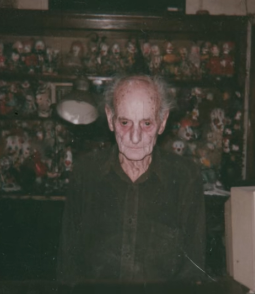
Hundreds of clowns. Porcelain clowns. Plush clowns. Ceramic clowns. Clowns on shelves. Clowns on the walls. Clowns hanging from the ceiling. Clowns with painted smiles and glass eyes and small, grasping hands. They were everywhere. They were watching. They were waiting.
And right next door, separated from the motel by a chain-link fence, was an old cemetery. The graves were weathered and crooked. The headstones were cracked and covered in moss. The dead had been there for over a century.
It was the kind of place that people drove past quickly, their eyes fixed on the road ahead. It was the kind of place that made you lock your doors and roll up your windows. It was the kind of place that whispered to you as you passed: *Keep driving. Don’t stop. Don’t look back.*
But on the night of October 12, 1996, a truck driver stopped.
—
**Part 2: The Truck Driver**
His name was Frank. He was forty-seven years old, with a tired face and a grey beard and hands that had spent decades gripping a steering wheel. He had been driving for eighteen hours straight—from Salt Lake City to Las Vegas and back again—and he was exhausted. He needed sleep. He needed a bed. He needed a place to close his eyes for a few hours before hitting the road again.
He saw the neon clown. He saw the vacancy sign. He pulled into the parking lot.
The lobby was empty. The receptionist was a young man—maybe twenty-five—with slicked-back hair and a name tag that read *Danny*. He was sitting behind the counter, reading a magazine. He looked up when Frank walked in.
“Room for the night?” Danny asked.
“Just a few hours,” Frank said. “I need to be back on the road by dawn.”
Danny nodded. He slid a registration card across the counter. Frank filled it out. He handed over his credit card. Danny ran it through the machine.
Then Frank asked the question.
“Has anyone ever complained about the clowns?”
Danny laughed. It was a quick, nervous laugh. “People complain about all kinds of things.”
Frank looked at the clowns on the shelves. They were all smiling. Their eyes were all fixed on him.
“I bet they do,” he said.
Danny handed him a key. “Room 7. It’s at the end of the row.”
Frank took the key. He walked out of the lobby. He walked past the clowns. He walked to his truck, grabbed his duffel bag, and walked to Room 7.
He unlocked the door. He stepped inside.
The room was small and dim. There was a bed, a nightstand, a lamp, a television. And there were clowns. Dozens of them. On the nightstand. On the dresser. On the windowsill. On the shelf above the bed.
They were all facing different directions. Some looked at the door. Some looked at the window. Some looked at the bed.
Frank set his bag on the floor. He kicked off his boots. He lay down on the bed.
He looked at the clowns.
They looked back.
—
**Part 3: The Morning**
The next morning, the truck was still there.
It was parked in the same spot—a white Peterbilt with a faded logo on the side. The engine was cold. The doors were locked. The curtains in the cab were drawn.
But Frank was not in the truck. He was not in Room 7. He was not anywhere.
The maid found the room at 10 AM. The door was unlocked. The bed was made. The television was off. The lamp was on.
Frank’s wallet was on the nightstand. His clothes were folded on the chair. His keys were on the dresser. His boots were beside the bed.
But Frank was gone.
The maid called the manager. The manager called the police.
—
**Part 4: The Investigation**
Detective Maria Sanchez arrived at the Clown Motel at noon.
She was a twenty-year veteran of the Tonopah Police Department. She had seen a lot of strange things in her career—drunks who wandered off into the desert, tourists who got lost in the mountains, fugitives who tried to hide in the abandoned mines. She had never seen anything like this.
She interviewed Danny. He told her the same story he had told the police the first time: Frank had checked in shortly before midnight, paid for a few hours, and asked about the clowns.
“Did he seem nervous?” Maria asked.
“A little,” Danny said. “But most people are nervous when they stay here.”
“Did you see him leave?”
“No. I was in the back. I didn’t see anything.”
Maria searched Room 7. She found Frank’s belongings. She found his wallet. She found his clothes. She found his keys.
She also found something else.
The clowns.
Every clown in the room had been turned toward the bed.
Every single one.
—
**Part 5: The Clowns**
Maria called the manager. His name was Harold. He was a small man with a nervous twitch and a habit of wringing his hands.
“Were the clowns facing the bed last night?” Maria asked.
Harold shook his head. “No. They were facing different directions. I dust them every morning. I know where they’re supposed to be.”
“And now they’re all facing the bed.”
“Yes.”
“Who could have moved them?”
“No one. The room was locked. The only key is the one Frank had.”
Maria looked at the clowns. They were all smiling. Their eyes were all fixed on the bed. The bed where Frank had slept. The bed where Frank had disappeared.
She shivered.
—
**Part 6: The Cemetery**
Maria searched the cemetery next door.
She walked through the rows of weathered headstones. She read the names—*Miller, 1887. Thompson, 1902. Hayes, 1919.* She looked for signs of disturbance. She looked for fresh dirt. She looked for footprints.
She found nothing.
She searched the motel again. She searched the parking lot. She searched the desert behind the building. She searched the abandoned mine shafts that dotted the hills.
She found nothing.
Frank had vanished.
—
**Part 7: The Receptionist**
Maria interviewed Danny again.
This time, she pressed him harder.
“Did you see Frank leave?”
“No.”
“Did you hear anything?”
“No.”
“Did you go into his room?”
“No.”
“Did you move the clowns?”
“No.”
“Did you know Frank?”
“No.”
“Then why did you tell the police he checked out during the night?”
Danny blinked. “What?”
“You told the first officers that Frank checked out. But there’s no record of him leaving. No credit card receipt. No key returned. No nothing.”
Danny’s face went pale. “I—I must have been confused.”
“Confused about what?”
“I don’t know. I just—I thought I saw him leave.”
“But you didn’t.”
“No.”
Maria stared at him. He looked away.
—
**Part 8: The Question**
Frank was never found.
His truck was towed away. His belongings were returned to his family. His case was filed as a missing person. It remained open for years. It was never solved.
The Clown Motel stayed open. It still stays open. The clowns are still there. They are still smiling. They are still watching.
And sometimes, late at night, when the neon sign flickers and the wind blows through the cemetery, people say they can hear something.
A voice. A man’s voice. Whispering.
*Has anyone ever complained about the clowns?*
And then a laugh. A low, gurgling laugh.
And then silence.
—
**Part 9: The Lesson**
Did the receptionist know more than he was telling the police?
Or are those really just clown figures standing in the rooms?
And is something else hiding among them?
The Clown Motel is still there. It is still waiting. It is still smiling.
And if you ever drive past it—if you ever see the neon clown, if you ever feel the urge to stop, to rest, to close your eyes for just a few hours—remember Frank.
Remember the truck driver who checked in and never checked out.
Remember the clowns that turned toward the bed.
And remember the question.
*Has anyone ever complained about the clowns?*
—
**The End**