
#
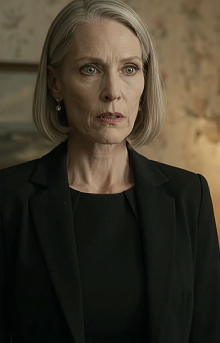
Victoria had barely taken off her black coat when the lawyer began reading. The funeral had ended an hour earlier, and the house still smelled of lilies and coffee and the faint, stubborn scent of their father’s pipe. She sat at the dining table with her arms crossed, her jaw set, her grief worn like armor. Beside her, her younger brother Ben sat quietly, his hands folded in his lap, his eyes fixed on the lawyer’s folder as if he already knew what it contained.
Their father had never been an easy man. He had been stubborn, private, and occasionally cruel in the way that quiet men can be when they mistake silence for strength. But he had also built this house with his own hands. He had sanded its floors, framed its windows, and carved the rocking chair that sat by the fireplace, the one with the uneven armrest that he had never bothered to fix. Victoria had always assumed the house would be divided between them. That was what fathers did. That was what wills were for.
The lawyer, a thin man named Mr. Barrett, cleared his throat and adjusted his glasses. “The will is unusual,” he said. “I want to prepare you both for that.”
Victoria sighed. “Just read it.”
Mr. Barrett read. The house, the land, the savings—all of it was addressed in careful legal language until he reached the final clause. Then he stopped, looked up, and read the line again as if he could not quite believe it.
“The house shall belong to the person who finds the key.”
Victoria stared at him. For a moment, she did not move. Then she laughed—a short, sharp sound with no humor in it. “What?”
“That is what it says,” Mr. Barrett said. “The house belongs to the person who finds the key.”
Victoria pushed her chair back and stood. “Dad left the house to whoever finds a key? That’s absurd. That’s not a will. That’s a riddle. He’s dead, and he’s still playing games.”
She reached across the table, snatched the pages from Mr. Barrett’s hands, and threw them down. They fluttered across the floor like wounded birds. One page landed against the leg of the rocking chair. Another slid under the sideboard. Victoria stood breathing hard, her face flushed, her hands trembling.
“He couldn’t just say it,” she said. “He couldn’t just leave us the house like a normal father. He had to make us compete. Even now. Even after everything.”
Ben did not answer. He had not spoken since the funeral. He rose from his chair slowly, as if moving through water, and walked to the rocking chair by the fireplace. He knelt beside it and ran his hand along the armrest—the uneven one, the one their father had never fixed. Then he lifted the cushion.
Beneath it, set into the wood, was a small compartment. It was so carefully fitted that Victoria had never noticed it, though she had sat in that chair a hundred times. Ben pressed the edge with his thumb, and the panel clicked open.
Inside was a brass key and a sealed envelope.
Victoria’s breath caught. “How did you know?”
Ben did not look at her. “He used to sit here every night,” he said. “After Mom died. He’d lift the cushion and check something. I thought it was his reading glasses. I thought it was nothing.”
Mr. Barrett crossed the room and took the envelope. He broke the seal carefully, unfolded the paper inside, and read in silence for a long moment. Then he looked up, and his face had changed.
“This will was written one week after the first,” he said. “It revokes the earlier document.”
Victoria’s arms dropped to her sides. “What?”
Mr. Barrett held out the page. “The house is left to the person who finds the key. But the key was meant for one person specifically.”
Ben took the paper. He read the line Mr. Barrett pointed to, and his voice dropped to almost a whisper. “To my daughter… Grace Holloway.”
The name landed in the room like a stone in still water.
Victoria frowned. “Who?”
Ben did not answer immediately. He was reading the letter that had been folded behind the will, his eyes moving quickly across their father’s cramped handwriting. When he finished, he sat down heavily in the rocking chair and stared at the floor.
“Grace Holloway,” he said. “She was the aide at the nursing home. The one who took care of him his last year.”
Victoria’s face tightened. “The one who was always there? The one he talked about?”
“Yes.”
“I met her once,” Victoria said. “She seemed… fine. I don’t understand.”
Ben looked up. “She’s his daughter.”
Victoria went very still.
Ben held up the letter. “He wrote it all down. He met her mother when he was young. Before Mom. He loved her, or he thought he did, and then he left. He never knew she was pregnant. He never knew Grace existed until he saw the necklace she wore—the one he gave her mother. He recognized it. He asked her about it. And she told him.”
The room was silent. Victoria looked at the pages scattered on the floor, at the rocking chair, at the secret compartment that had been hidden under the cushion for years. Her face was pale, and her hands had begun to shake again.
“He knew,” she said. “All that time, he knew, and he never told us.”
“He didn’t know how,” Ben said. “He says so in the letter. He was afraid. He was ashamed. He kept waiting for the right moment, and then he ran out of time.”
Victoria turned away. She walked to the window and stood with her back to them, looking out at the yard their father had mowed every Saturday for thirty years. Her shoulders were rigid. Ben watched her, waiting for the anger he knew so well. But when she spoke, her voice was quiet.
“He left the house to her.”
“He left the house to whoever found the key,” Ben said. “But he wanted her to find it. He wanted her to have it.”
“And what about us?”
Ben looked down at the brass key in his palm. “Maybe he thought we already had enough.”
That afternoon, Mr. Barrett called Grace Holloway. She arrived just before four o’clock, wearing a plain gray coat and carrying a small canvas bag. She stood at the threshold of the house and did not step inside. Her eyes moved from the porch swing to the worn wooden floor to the rocking chair by the fireplace, and something in her face crumpled and then steadied again.
“I didn’t come for the house,” she said. Her voice was soft but clear. “I didn’t even know about the will until Mr. Barrett called.”
Victoria stood by the table with her arms crossed. Ben stood beside the rocking chair, the brass key in his hand.
Mr. Barrett read the will again, this time for Grace. When he finished, she shook her head.
“I don’t need the house,” she said. “I have an apartment. I have a life. I didn’t know him for very long, and I’m not trying to take anything from you.”
She looked at Ben, then at Victoria. Her eyes were steady, but her hands were trembling.
“I only wanted to know if I had brothers or sisters,” she said. “That’s all. I wanted to know if I was alone.”
Ben crossed the room and placed the brass key in her hand. It was warm from his grip, and it gleamed dully in the afternoon light.
“You’re not alone,” he said.
Victoria did not move for a long time. She stood by the table with her jaw tight and her eyes fixed on the scattered pages of the will. Then, slowly, she bent down and began to pick them up. She gathered them one by one—the page by the rocking chair, the page under the sideboard, the page that had landed near the door. She smoothed them against her palm and stacked them neatly.
When she stood up, her eyes were wet. She looked at Grace, and for the first time that day, her face softened.
“Come inside,” she said. “Come inside, little sister.”
Grace stepped over the threshold. The old floorboards creaked beneath her feet. Victoria crossed the room and took her hand, and Ben watched them stand together in the house their father had built—a house that had held secrets for years, and would now have to hold something else.
Outside, the light was fading. Inside, the rocking chair sat empty by the fireplace, its uneven armrest waiting for someone to sit down.