
**Title: **
—
**Part 1: The Walk Home**
Emily Carter was nine years old when she disappeared.
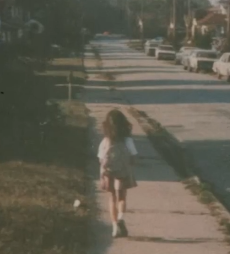
It was a Tuesday in October 1987, and the leaves were turning gold and red along the winding roads of rural Vermont. Emily attended the small elementary school at the edge of town, a brick building with a playground and a flagpole and a bell that rang at three o’clock sharp. She was in the fourth grade—a quiet girl with dark braids and a missing front tooth and a habit of humming to herself as she walked.
Her parents, David and Susan Carter, both worked. David was a mechanic at the garage on Main Street. Susan was a receptionist at the doctor’s office. They could not pick Emily up from school every day, so she walked. It was a short walk—less than a mile—along a gravel road that cut through a patch of woods before opening onto the field behind their house. She had made the walk a hundred times. She knew every tree, every rock, every bend in the road.
On that Tuesday, she did not come home.
Susan arrived at 3:30 to find the back door unlocked, the kitchen empty, Emily’s backpack missing. She called David. He came home immediately. They called the school. The school said Emily had left at 3:05, just like always. They called the neighbors. No one had seen her. They called the police.
By evening, a search party had gathered. By midnight, hundreds of volunteers were combing the woods with flashlights and search dogs. By morning, the story had made the local news.
Emily Carter was gone.
—
**Part 2: The Search**
The search lasted for weeks.
Police checked every road, every trail, every abandoned building. They dragged the pond at the edge of the woods. They interviewed every neighbor, every teacher, every classmate. They followed every lead—a suspicious car, a strange man, a report of a child crying in the distance. None of it led anywhere.
There was no clothing. No footprints. No sign of a struggle. No indication that Emily had ever left the gravel road.
The woods were dense—hundreds of acres of pine and maple and oak, crisscrossed with old logging trails and deer paths. The search dogs lost the scent at the edge of the road. The volunteers found nothing. The police found nothing.
After a month, the search was scaled back. After six months, it was officially suspended. After a year, the case went cold.
But David and Susan did not give up.
They kept Emily’s bedroom exactly as she had left it—the bed unmade, the stuffed rabbit on the pillow, the drawing of a rainbow taped to the wall. They put up posters in every store window. They appeared on local news programs. They hired a private investigator. They wrote letters to politicians. They did everything they could.
But the years passed, and the leads dried up. The posters faded. The news programs moved on. The private investigator returned their money and said he was sorry.
Four years went by.
—
**Part 3: The Hunter**
The hunter’s name was Frank Thompson.
He was sixty-two years old, a retired mailman with a cabin at the edge of the woods and a dog named Max. He hunted every autumn—deer season, mostly, but sometimes grouse or rabbit. He knew the woods better than anyone. He knew the trails, the clearings, the hidden ponds. He knew the places where no one ever went.
On a cold morning in November 1991, Frank was walking a trail he had not taken in years—a narrow path that wound through a particularly dense patch of forest, far from any road or house. He had his rifle over his shoulder and Max at his heels. The woods were quiet—the kind of quiet that comes after the leaves have fallen and the birds have flown south.
And then he heard it.
A faint sound, barely audible over the crunch of his boots. A voice. A girl’s voice. Humming.
Frank stopped. He listened. The sound was coming from somewhere ahead—from the trees, from the underbrush, from the darkness between the trunks. He followed it.
The path led him to a small house.
It was a cabin, really—a one-story structure of weathered wood and rusted tin, half-hidden by vines and branches. It was so well concealed that Frank had walked past it a dozen times without noticing. The windows were dark. The door was closed.
But the humming was coming from inside.
Frank approached slowly. He knocked on the door. No answer. He tried the handle. It was unlocked.
He pushed the door open.
The inside was dark and cold. There was a table, a chair, a wood stove that had not been lit in days. There was a staircase leading to a second floor. Frank climbed it.
At the top, there was a room. The door was open. Inside, sitting on the floor, was a girl.
She was thin—terribly thin—with pale skin and matted hair and eyes that seemed too large for her face. She was wearing a ragged sweater and a pair of jeans that were too short for her. Several of her teeth were missing. She was humming to herself, rocking back and forth, her arms wrapped around her knees.
Frank stared at her. He knew immediately who she was. He had seen the posters. He had seen the news reports. He had seen the face of the girl who had disappeared four years ago.
“Emily?” he whispered.
She did not answer. She did not look at him. She simply kept humming.
Frank pulled out his phone—a bulky cell phone, the kind that only worked in certain spots—and called the police.
—
**Part 4: The Rescue**
The police arrived within an hour.
They found Emily in the same position—sitting on the floor, humming, staring at the wall. They wrapped her in a blanket and carried her down the stairs. They put her in the back of a cruiser and drove her to the hospital.
The house was searched from top to bottom. There was no sign of anyone else. There was no sign of a captor. The only evidence of habitation was Emily’s presence—a mattress on the floor, a bucket in the corner, a few cans of food in the kitchen. There were no fingerprints. No DNA. No documents. No photographs.
The house was empty.
Emily was treated at the hospital for malnutrition and dehydration. She was given fluids, vitamins, food. She was examined by doctors, psychiatrists, social workers. She did not speak. Not to the doctors. Not to the police. Not to her parents.
She simply sat in her bed, humming to herself, staring at the wall.
—
**Part 5: The Investigation**
The police tried to find out what had happened.
They interviewed Frank Thompson. They interviewed the neighbors. They interviewed everyone who had ever known Emily or her family. They searched the woods for miles around the cabin. They checked the cabin for fingerprints, for DNA, for any trace of the person who had kept her there.
They found nothing.
No one had seen anyone near the cabin. No one had seen anyone with Emily. No one knew who had built the cabin or who had lived there before. The property records were vague—the land had been part of a larger parcel sold decades ago, and the cabin had been forgotten.
Emily never told them what had happened.
She did not speak about the four years. She did not speak about the cabin. She did not speak about the person who had kept her there. She simply returned to her family, to her bedroom, to her life—and she did not speak.
—
**Part 6: The Aftermath**
David and Susan brought Emily home.
They had kept her bedroom exactly as she had left it—the bed unmade, the stuffed rabbit on the pillow, the drawing of a rainbow taped to the wall. Emily walked into the room and stood there for a long time. She did not smile. She did not cry. She simply stood there, looking at the things she had left behind.
Then she walked to the bed, picked up the stuffed rabbit, and held it against her chest.
She still did not speak.
The years that followed were difficult. Emily struggled with her health, her education, her relationships. She saw therapists, doctors, specialists. She slowly regained her strength, her teeth, her weight. She slowly learned to trust again.
But she never spoke about what had happened.
—
**Part 7: The Silence**
Being found did not restore the missing account of those years. Investigators could identify the girl without identifying who had kept her there, and rescue did not make speaking about it possible.
The house’s emptiness left others free to imagine explanations she never confirmed. Her silence belonged to her survival as much as to their mystery. The woods had given someone back, but they had not surrendered the whole story.
And that is the way it remains.
Emily Carter is still alive. She is in her forties now. She has a job, a home, a life. She has friends, a partner, perhaps children of her own. She has built something new out of the wreckage of her childhood.
But she does not speak about the four years. She does not speak about the cabin. She does not speak about the person who kept her there.
And the woods keep their secret.
—
**The End**